
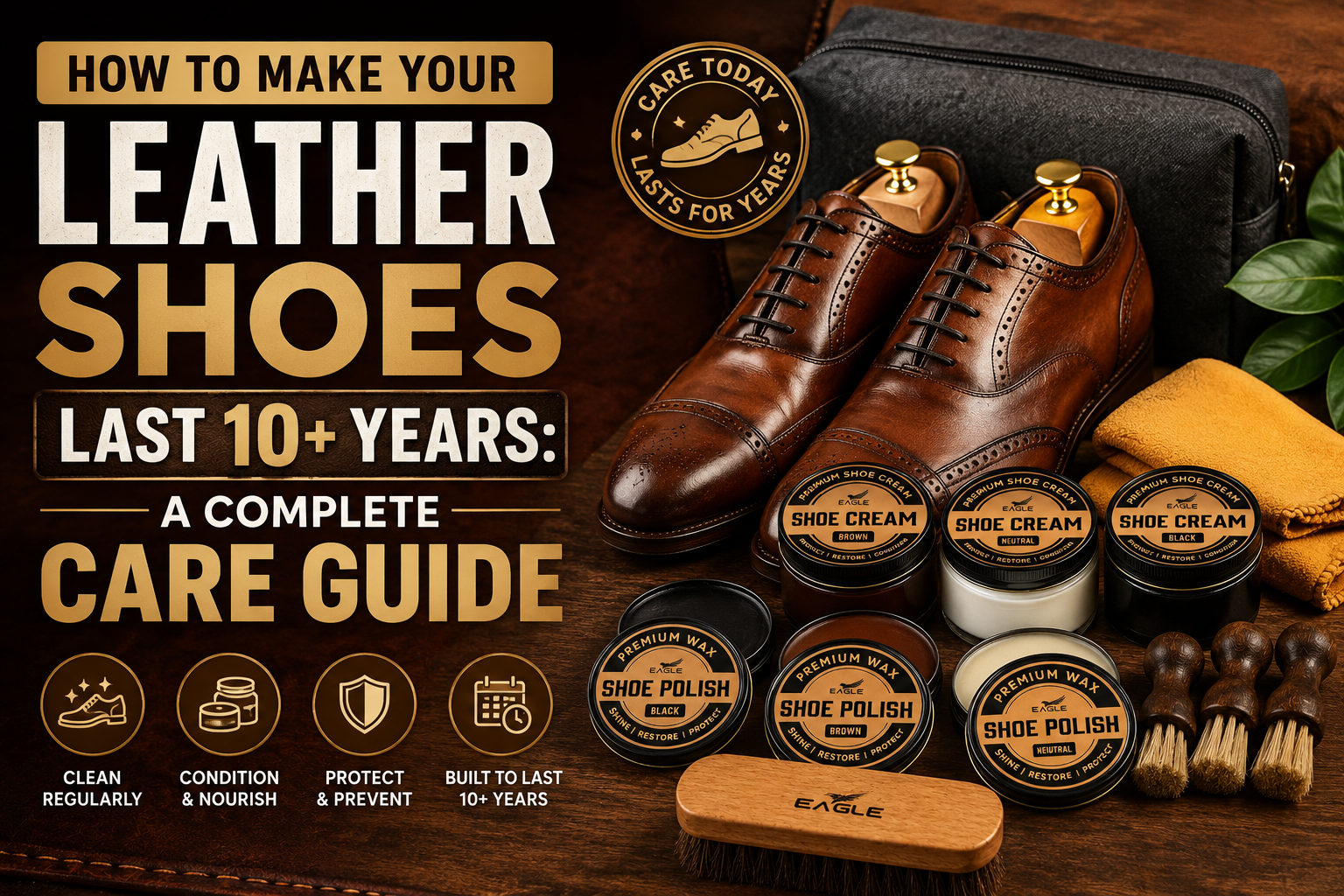
How to Make Your Leather Shoes Last 10+ Years: A Complete Care Guide
Quality leather shoes can last much longer than most people expect. With the right routine, a well-made pair of dress shoes, loafers, leather boots, or work shoes can stay wearable for 10 years or more. The secret is not complicated: clean them before dirt builds up, condition before leather dries out, polish before scuffs become permanent, protect them from moisture, and store them so the shape survives between wears.
This complete leather shoe care guide explains how to build a simple routine that protects smooth leather shoes for the long term. It covers daily habits, weekly maintenance, deep cleaning, conditioning, polishing, weather protection, storage, resoling, and the common mistakes that shorten the life of expensive footwear.
Affiliate disclosure: This article includes an affiliate link. If you buy through that link, Designer Trends INC may earn a commission at no extra cost to you.
Animated care system
10-year leather shoe formula
Start With Shoes Worth Maintaining
No care routine can turn poor construction into heirloom footwear. If you want leather shoes to last a decade, start with shoes made from real leather uppers, sturdy stitching, replaceable soles when possible, and a shape that fits your foot correctly. Shoes that are too tight crease aggressively, strain seams, and break down faster. Shoes that are too loose rub at the heel and distort across the vamp.
Look for smooth finished leather when you want the easiest long-term maintenance. Suede and nubuck can also last, but they need different brushes, erasers, and protector sprays. Patent leather, corrected-grain leather, and heavily coated materials require lighter care because conditioners and polish may not absorb the same way.
The Daily Habit That Adds Years: Brush After Wear
The most overlooked shoe care habit is also the easiest. After wearing leather shoes, brush them with a horsehair brush for 30 to 60 seconds. This removes dust and grit before it settles into pores, seams, broguing, and crease lines. Dust may look harmless, but it acts like a fine abrasive when leather flexes.
After brushing, let the shoes rest. Leather absorbs moisture from feet and weather. Wearing the same pair every day gives that moisture no time to evaporate, which can weaken leather, lining, stitching, and soles. Rotating between two or three pairs gives each pair recovery time and dramatically improves lifespan.
Use Shoe Trees Every Time
Cedar shoe trees are one of the highest-impact investments for leather shoes. They help hold the original shape, reduce deep creasing, and absorb some moisture after wear. Insert shoe trees shortly after taking the shoes off, while the leather is still warm and flexible. This helps the upper dry in its intended form instead of collapsing into wrinkles.
If cedar shoe trees are not available, use clean paper or structured shoe forms temporarily. Avoid newspaper on light linings because ink can transfer. For boots, use boot shapers or upright storage so the shafts do not fold into hard creases.
Clean Before You Condition or Polish
Never polish over dirt. Polish can trap grime against the surface and create dull, uneven buildup. Start with dry brushing. Then wipe the shoes with a slightly damp microfiber cloth. For heavier dirt, use a leather-safe cleaner and work gently in small sections. Keep moisture controlled; leather should be cleaned, not soaked.
Pay attention to welt stitching, toe creases, heel counters, and the area where the upper meets the sole. These spots collect dust and salt. If your shoes were exposed to winter salt, clean them as soon as possible because salt can dry and stain leather quickly.
Condition Leather Before It Cracks
Conditioner helps smooth leather stay flexible. You do not need to condition after every wear, and over-conditioning can soften structure or darken leather. A good rule is to condition when leather feels dry, looks flat, creases sharply, or has been exposed to rain, heat, or heavy cleaning.
Apply a small amount of conditioner with a soft cloth, spread it thinly, and let it absorb. More product is not better. If the leather still feels dry after resting, apply another light layer later. For delicate colors, test on a hidden area first. Tan, cognac, oxblood, hand-finished, and light leathers can shift tone more easily than black leather.
Polish for Color, Shine, and Surface Protection
Shoe polish does more than make shoes look formal. Cream polish can refresh color and soften light scuffs. Wax polish can create a higher shine and add a thin surface layer that helps resist minor moisture and abrasion. Most long-term routines use both, but they should be applied sparingly.
Use cream polish when leather looks faded or scuffed. Match the color carefully, or use neutral when you want shine without adding pigment. Use wax polish on toe caps and heel counters when you want a dressier finish. Avoid heavy wax buildup across flex points because thick wax can crack where the shoe bends.
A Practical Shoe Care Kit
You do not need a shelf full of products. A practical leather shoe care kit should include a horsehair brush, microfiber cloths, dauber brushes, leather cleaner, conditioner, cream polish, wax polish, and shoe trees. Black, brown, and neutral products cover many wardrobes, though unusual leather colors may need more specific polish.
For a ready-made option, consider the Eagle 13-Piece Shoe Polish Kit on Amazon. The Amazon listing describes it as a smooth-leather shoe care kit with black, brown, and neutral creams and waxes, dauber brushes, shine cloths, and a travel case. It is a practical fit for people who want core polishing tools in one organized kit. As with any leather product, read the label and test first, especially on delicate or light-colored leather.
Important: Do Not Use Smooth Leather Products on Suede
Smooth leather polish, wax, and conditioner are not made for suede or nubuck. These materials have a raised nap that can flatten, darken, or stain if treated with standard leather creams. If your shoes are suede, use a suede brush, suede eraser, and protector spray instead. For a dedicated walkthrough, read our suede protector spray guide.
Mixed-material shoes need extra care. If a shoe has smooth leather panels and suede panels, protect each material separately and keep polish away from suede areas.
Protect Shoes From Water Without Suffocating Leather
Leather is durable, but repeated soaking shortens its life. Use a leather-appropriate protector when weather calls for it, and avoid wearing fine dress shoes in heavy rain, snow, or slush. If shoes get wet, wipe away surface moisture, insert shoe trees or clean paper, and let them dry at room temperature. Never place leather shoes beside a heater, in direct sun, or under a hair dryer. Fast heat can harden leather and cause cracking.
Once shoes are dry, brush them, inspect for salt marks, condition lightly if needed, and repolish. Water damage often becomes permanent when people ignore shoes after they dry.
Store Leather Shoes Correctly
Good storage keeps leather shoes ready for the next decade. Store them clean, dry, and shaped. Use breathable shoe bags rather than sealed plastic. Keep shoes away from damp closets, direct sunlight, and hot car trunks. If storing for a season, clean and condition them first, then check them occasionally for dryness or mildew.
Travel can be rough on footwear. Pack shoes in shoe bags, use shoe trees or soft stuffing, and keep polish or creams in sealed bags so product cannot leak into luggage.
Know When to Repair Instead of Replace
Long-lasting shoes are maintained and repaired, not just cleaned. Replace worn heel lifts before they grind into the heel block. Resole quality shoes before holes reach the insole. Repair loose stitching early. Use a cobbler when damage affects structure, sole attachment, deep scratches, or torn leather.
A 10-year shoe is usually not a shoe that avoided all wear. It is a shoe that received small repairs before small problems became expensive failures.
Leather shoe care schedule
Common Mistakes That Ruin Leather Shoes
- Wearing the same pair every day without rotation.
- Skipping shoe trees and letting deep creases set permanently.
- Using too much conditioner or polish in one session.
- Applying polish over dirt, salt, or old product buildup.
- Drying wet leather with direct heat.
- Using smooth leather products on suede or nubuck.
- Ignoring worn heels and soles until the shoe structure is damaged.
- Storing leather in sealed plastic or damp closets.
Related Leather Care Guides
For more detailed product guidance, read our guide to shoe polish vs leather conditioner. If you care for bags as well as footwear, see best leather care products for luxury shoes and bags. For white footwear, our white sneaker cleaning guide covers material-safe cleaning methods.
You can also browse the Designer Trends INC brand portfolio to learn more about our footwear and leather care focus.
Frequently Asked Questions
Can leather shoes really last 10 years?
Yes, if they are well made, fit properly, and receive consistent care. Rotation, shoe trees, cleaning, conditioning, polishing, and timely repairs are the habits that make a decade realistic.
How often should I polish leather shoes?
Polish when shoes look faded, scuffed, or dull. For frequently worn dress shoes, that may be every few weeks. For occasional shoes, brushing and light touch-ups may be enough between deeper sessions.
How often should I condition leather shoes?
Condition only when leather feels dry or after exposure to harsh conditions. Many smooth leather shoes need conditioning every few months, but climate, wear frequency, and leather type matter.
Is neutral polish better than colored polish?
Neutral polish is useful when you want shine without changing color. Colored cream polish is better when leather has faded or scuffed and needs pigment restored.
Should I buy a complete shoe care kit?
A complete kit is convenient if it includes products you will actually use. The key items are brushes, cloths, conditioner, polish, and color options that match your shoes. The Eagle 13-Piece Shoe Polish Kit is one option for smooth leather shoes.
Final Thoughts
Making leather shoes last 10+ years is mostly about consistency. Brush after wear, rotate pairs, use shoe trees, clean before polishing, condition when leather needs it, protect against weather, and repair soles or heels before damage spreads. A careful routine keeps leather flexible, color rich, and structure intact.
Start small. Put a brush and shoe trees near the place where you take off your shoes. Build a compact care kit. Then set a monthly reminder to inspect your footwear. The routine takes minutes, but the payoff can be years of extra life from shoes you already own.
Join the Discussion
Comments (0)
No comments yet. Be the first to share your thoughts!