
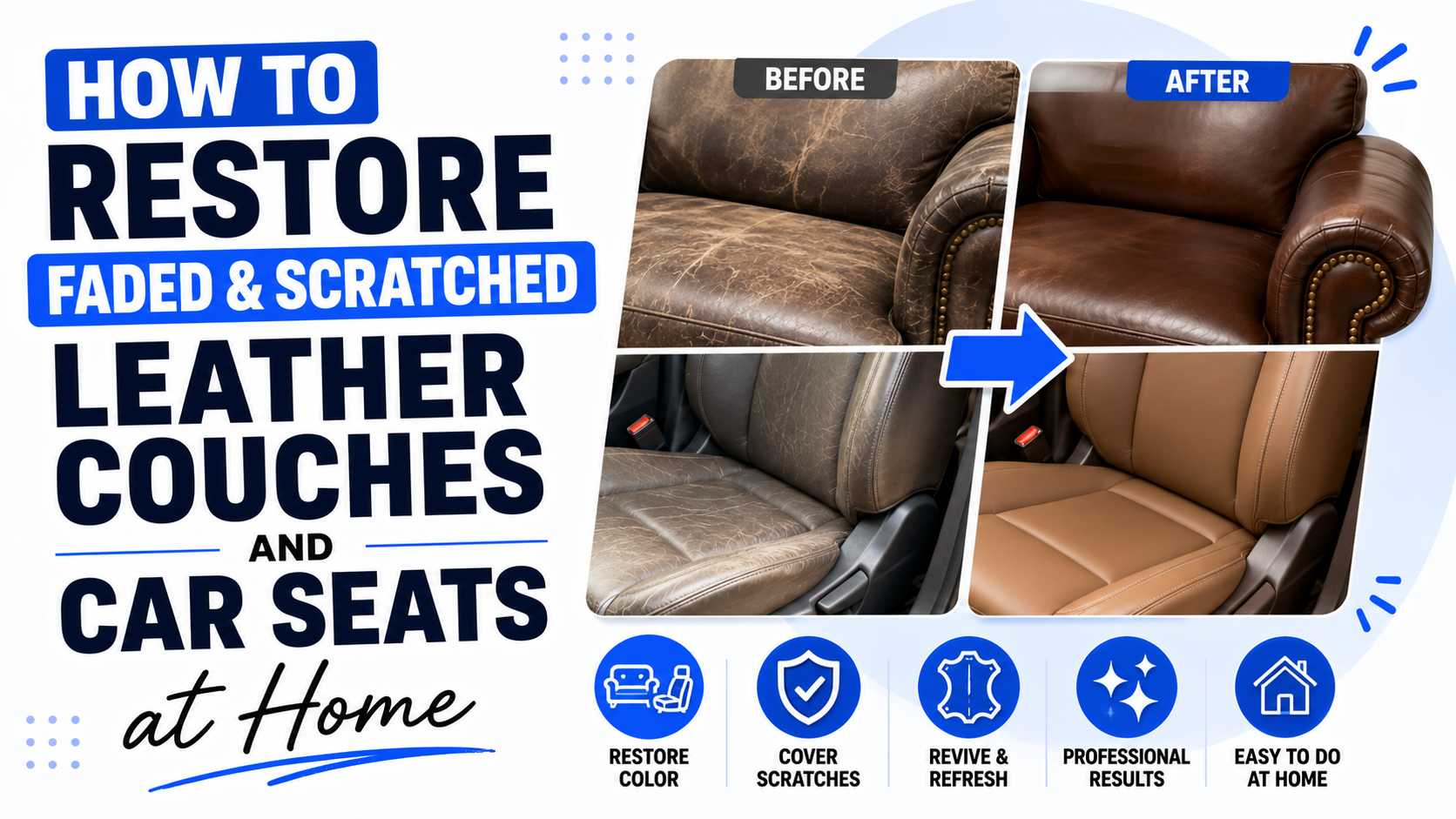
How to Restore Faded and Scratched Leather Couches and Car Seats at Home
Leather furniture and car interiors take a different kind of abuse than shoes or bags. Couches absorb years of sunlight through windows, body oils, pet claws, and everyday sitting pressure. Car seats face direct UV exposure, temperature swings from hot summers to cold winters, seatbelt friction, and constant contact with denim, keys, and belt buckles. Over time, both surfaces can fade, crack, scuff, or show worn patches where the color has thinned out completely. The good news is that a surprising amount of this damage can be improved at home with the right cleaning, conditioning, and color restoration approach.
This guide from Designer Trends INC explains how to assess leather couch and car seat damage, clean the surface safely, treat light scratches, and use a color restoration kit for deeper fading or worn spots. It also covers the differences between furniture leather and automotive leather, since they are not always cared for the same way.
Affiliate disclosure: This article includes affiliate links. If you buy through these links, Designer Trends INC may earn a commission at no extra cost to you.
Identify the Type of Damage First
Restoration only works if you match the fix to the actual problem. General fading from sunlight or age usually responds well to cleaning, conditioning, and a color restorer matched to the original shade. Light surface scratches, the kind that only affect the top coating, often improve significantly with conditioner and gentle buffing. Worn patches where the color has rubbed away completely, common on driver's seat bolsters and couch armrests, usually need a dedicated color restoration product rather than conditioner alone. Deep cracking, torn seams, or peeling coating are more serious and may need professional reupholstery or repair rather than a home kit.
Take a close look in good lighting before starting. Run a clean finger over the area. If color comes off on your finger, the leather may already have significant coating loss, which changes the approach from simple conditioning to full color restoration.
Clean Before You Restore Anything
Cleaning always comes first. Vacuum loose dust and debris from seams and crevices. Wipe the surface with a dry microfiber cloth, then use a gentle leather cleaner on a damp cloth to remove body oils, sunscreen residue, pet hair oils, and general grime. Work in small sections and avoid soaking the leather. For car seats, pay close attention to the bolsters, the outer edges of the seat that take the most friction from getting in and out of the vehicle, since they usually show wear first.
Let the leather dry completely before applying any conditioner or color product. Cleaning over color loss will not fix the color, but it does make sure any restoration product you apply next bonds to a clean surface instead of trapped oil and dust.
Spot Test Before Treating the Whole Surface
Color restoration products and even some conditioners can change the finish, sheen, or shade of leather. Choose a hidden area, such as the underside of a cushion, the back of a seat, or a rear seat panel that gets less attention, and test the product there first. Wait for it to dry fully and check the color match, texture, and shine before treating a visible area like a couch cushion or driver's seat.
How to Treat Light Scratches
Many light scratches on smooth, finished leather are only surface level and can be softened significantly with a leather conditioner and gentle circular buffing using a soft cloth. Apply a small amount, let it sit for a few minutes, then buff. This works especially well on scratches that are pale or white rather than scratches that have gone through to a different color layer beneath the finish.
Deeper scratches that have removed color entirely usually need a color restoration product applied directly to the scratch and blended into the surrounding area. Building up thin layers is safer than one thick application, since a heavy coat can look glossy or uneven compared to the rest of the surface.
Recommended Products for Couch and Car Seat Restoration
For color restoration on couches, car seats, and shoes, Leather Hero is built specifically for this job. Their color restorer kits are designed to mend scratches and fading on furniture and automotive leather, which makes them a better match for couches and car seats than a footwear-focused polish or wax. For routine cleaning and light conditioning between deeper restoration sessions, the Leather Hero 2-in-1 Cleaner and Conditioner is a practical option that also works well on bags and other smooth leather accessories.
Best buy for this routine
Choose a Leather Hero color restoration kit for faded or worn patches on couches and car seats, and keep the 2-in-1 cleaner and conditioner on hand for routine upkeep in between.
Furniture Leather vs Car Seat Leather: Key Differences
Couch leather generally faces indirect sunlight, body oil, dust, and pet-related wear, but a more stable indoor climate overall. Car seat leather deals with much more aggressive conditions: direct UV through glass, extreme heat buildup in a parked car, cold winter contraction, and constant friction from getting in and out of the vehicle. This means car seats often need conditioning more frequently than couches, and color restoration on bolsters may need to be repeated sooner than on a couch armrest that gets similar wear.
If your car has a sunshade or is often parked outdoors, consider a leather protectant with UV resistance in addition to conditioner, since sun exposure is usually the single biggest driver of fading in vehicles.
Step-by-Step Restoration Routine
- Vacuum and dry-wipe the surface to remove loose dust and debris.
- Clean with a leather-safe cleaner on a damp cloth, working in small sections.
- Let the leather dry completely before applying any other product.
- Spot test conditioner and color restorer on a hidden area.
- Apply conditioner to restore flexibility and soften light scratches.
- Apply color restorer in thin layers to worn patches or deeper scratches, blending into the surrounding area.
- Let each layer dry before deciding whether another coat is needed.
- Buff gently once fully dry to even out sheen across the surface.
Common Mistakes to Avoid
Do not use household all-purpose cleaners, bleach, or ammonia-based glass cleaner on leather, since these can strip color and dry out the material. Do not apply color restorer over dirt or oil, since it will not bond evenly and may need to be reapplied sooner. Do not skip the spot test, especially on car seats where color and dye lots can vary between manufacturers. Do not expect one heavy application to fix years of fading. Thin, repeated layers almost always look more natural than a single thick coat.
Maintaining Restored Leather
Once a couch or car seat has been restored, protect the investment with routine care. Dust and vacuum regularly, wipe up spills immediately, and condition every few months depending on use and exposure. For cars, park in shade when possible and consider a UV-protectant leather spray during summer months. For couches, keep leather out of direct sunlight where practical, and rotate cushions if the design allows it so wear is distributed more evenly over time.
Backlinks and Related Resources
For more on leather care fundamentals, read our guide to the best leather care products for luxury shoes and bags and explore the full Designer Trends INC brand portfolio, including Leather Hero's color restoration and repair lines. For general consumer guidance on evaluating product claims, see the FTC consumer information resources.
FAQs
Can faded leather color really be restored at home?
Yes, in many cases. General fading and light scratches often respond well to cleaning, conditioning, and a color restoration kit matched to the original shade, applied in thin, tested layers.
How do I match the restoration color to my leather?
Test on a hidden area first and compare once fully dry. Some kits include mixable shades, which can help you match faded or slightly different tones more precisely.
Will conditioner alone fix a worn patch on a car seat?
Conditioner can soften and improve the look of light surface wear, but patches where color has rubbed away completely usually need a dedicated color restoration product.
How often should I condition leather car seats?
More often than couch leather in most cases, since car seats face direct sun, heat, and friction. Every few months is a reasonable starting point, adjusted for climate and use.
Can I use shoe polish on a leather couch or car seat?
No. Shoe polish is formulated for footwear and can transfer color to clothing or leave an unnatural finish on furniture and automotive leather. Use products designed for those surfaces instead.
What if the leather is cracked, not just faded?
Light dryness-related cracking may improve with conditioner over time, but deep structural cracks or torn seams usually need a professional upholsterer rather than a home restoration kit.
Conclusion
Restoring a faded couch or worn car seat is very achievable at home if you slow down and match the product to the actual damage. Clean first, test everything on a hidden area, condition for flexibility, and use a color restoration kit for scratches and worn patches rather than expecting conditioner to do that job alone. With patient, thin-layer application and regular maintenance afterward, leather furniture and car interiors can look cared for and consistent again instead of patchy or dull.
Join the Discussion
Comments (0)
No comments yet. Be the first to share your thoughts!