
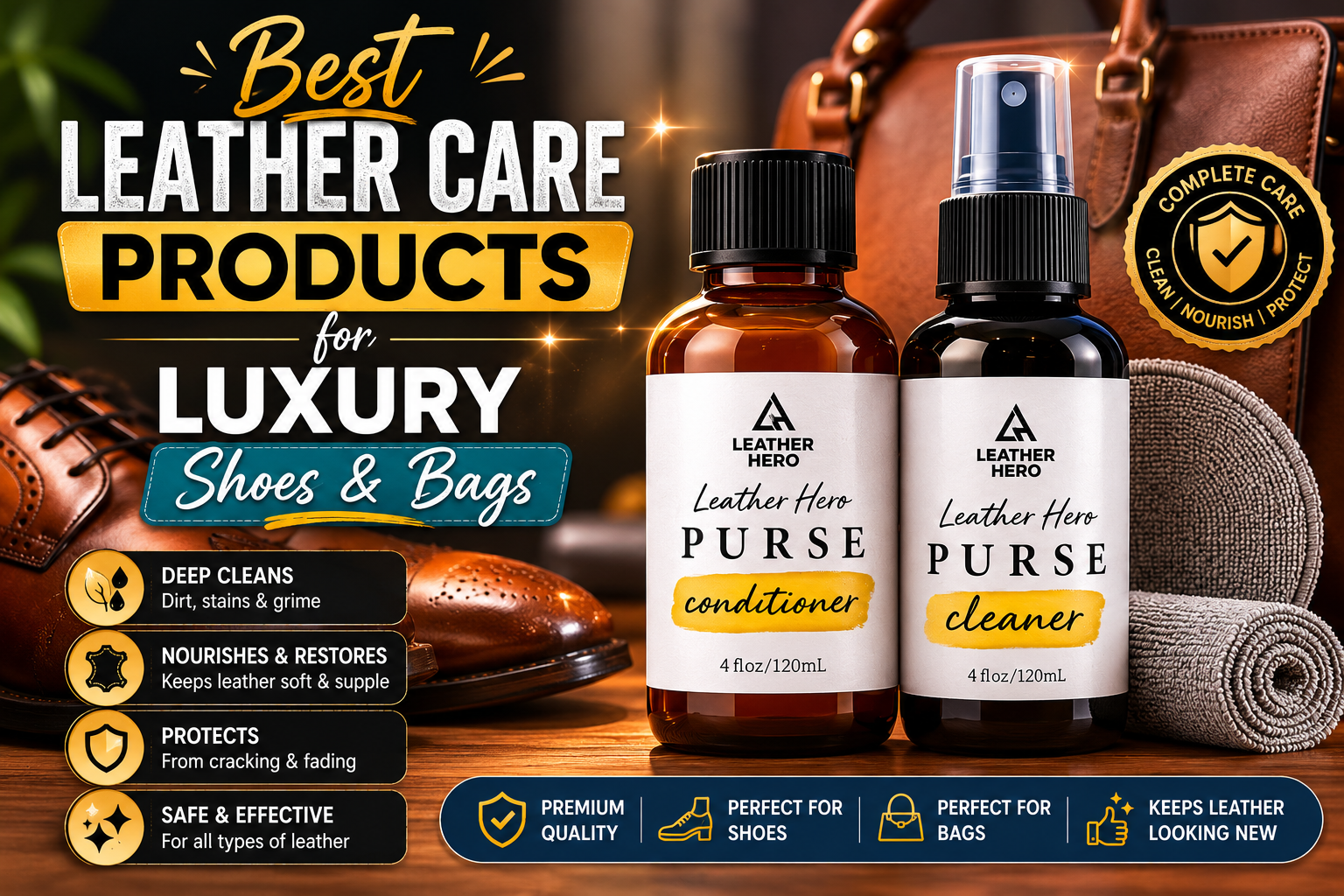
Best Leather Care Products for Luxury Shoes and Bags
Luxury leather lasts longest when it is cleaned, conditioned, protected, and polished with the right products at the right time. A premium shoe, handbag, boot, wallet, or jacket can lose its finish quickly if it is treated with harsh household cleaners or left exposed to water, salt, heat, and daily friction. The best leather care routine is simple, consistent, and matched to the material.
At Designer Trends INC, our portfolio is built around footwear care, leather preservation, and practical product education. This guide explains what to look for when choosing leather care products, how each product works, and how to build a routine that helps luxury leather stay clean, flexible, and ready to wear.
Start With the Type of Leather
Before buying a cleaner or conditioner, identify the leather finish. Smooth finished leather is common on dress shoes, belts, briefcases, and many handbags. It usually accepts gentle cleaners, cream polish, wax polish, and protective treatments. Suede and nubuck are more delicate and need brushes, erasers, and specialty protector sprays. Patent leather has a coated surface and should be wiped gently rather than treated like open-pore leather.
If you are unsure, test any product on a hidden area first. This is especially important for light colors, hand-dyed leather, exotic leather, vintage pieces, and designer bags with mixed materials. The goal is to improve the surface without changing color, texture, or finish.
Essential Leather Care Products
A complete leather care kit does not need to be complicated. Most people need four core products: a gentle cleaner, a conditioner, a protector, and a polish or color restorer. A cleaner removes surface dirt, old product buildup, and light stains. A conditioner replenishes oils and flexibility. A protector helps reduce damage from moisture and stains. A polish improves appearance and, when matched correctly, can revive color.
For footwear, the best routine is often cleaner first, conditioner second, polish third, and protector last. For bags and accessories, use a lighter hand. Too much product can leave residue, darken leather, or attract dust. Quality matters more than quantity.
Recommended Eagle Shoe Care Products on Amazon
For shoppers comparing care products, start with the Eagle Shoe Care Amazon store. For this routine, look for a gentle leather cleaner, a leather conditioner, a soft applicator cloth, and a finishing brush. You can also browse Eagle Shoe Care leather conditioner products on Amazon when your shoes, bags, or boots feel dry.
Choose products based on material instead of price alone. A smooth leather conditioner is helpful for dress shoes, bags, belts, and boots, while suede, nubuck, patent leather, and coated synthetics need specialty products. If you are building one compact kit, pair a cleaner and conditioner with a horsehair brush, microfiber cloth, and a small detail brush for seams and edges.
How Often Should You Care for Leather?
Everyday shoes may need a wipe down after each wear and a deeper care session every few weeks. Dress shoes worn occasionally may only need polishing before special events and conditioning every few months. Handbags should be cleaned when visibly dusty and conditioned sparingly. Boots exposed to rain, snow, or salt need more frequent attention because moisture can dry leather and weaken seams.
Storage is part of care too. Use shoe trees for leather shoes, stuff handbags with clean tissue or inserts, and keep leather away from direct sunlight. Breathable storage bags are usually better than sealed plastic because leather benefits from airflow.
Leather Care Routine for Luxury Bags
Luxury handbags need a softer routine than heavy-duty boots. Empty the bag first, shake out dust, and wipe the exterior with a dry microfiber cloth. If the leather is smooth and finished, apply a small amount of cleaner to the cloth instead of directly onto the bag. Work panel by panel, especially around handles, corners, and zipper areas where skin oils and friction collect.
Condition only when the leather feels dry or looks tired. Use a pea-sized amount, spread it thinly, and let it absorb before deciding whether more is needed. Over-conditioning can soften structure, darken pale leather, or leave a surface film that attracts dust. For designer bags, always test underneath a flap, behind a strap, or another hidden area before treating the visible panels.
Leather Care Routine for Luxury Shoes
For smooth leather shoes, remove loose dust after every wear and use shoe trees while the leather rests. Clean before applying conditioner or polish so residue is not sealed into the finish. Pay close attention to toe boxes, heel counters, welt stitching, and crease lines because those areas show wear first.
After conditioning, let the shoes sit for several minutes so the leather can absorb the product evenly. Then brush briskly with a horsehair brush. If you want more shine, apply polish in thin layers rather than one heavy coat. This creates a cleaner finish and reduces buildup around broguing, stitching, and seams.
Backlinks and Helpful Resources
For more product-specific guidance, explore the Designer Trends INC brand portfolio and our guide to shoe polish vs leather conditioner. For broader care and consumer product safety education, the Federal Trade Commission and Google Search Central resources are useful references for evaluating claims online.
Common Mistakes to Avoid
Do not use dish soap, bleach, alcohol wipes, or abrasive scrub pads on luxury leather. Do not over-condition leather until it feels greasy. Do not dry wet shoes with a heater or hair dryer, because fast heat can crack the surface. Do not apply dark polish to light leather unless you intentionally want to alter the color. Finally, do not ignore stitching, soles, edges, and hardware. A clean upper looks better when the whole item is maintained.
FAQs
Can I use the same leather conditioner on shoes and bags?
Usually yes, if both items are smooth finished leather and the product label supports that use. Test first on a hidden area because luxury bags and pale leathers can darken more easily than footwear.
Should I clean leather before conditioning it?
Yes. Cleaning removes dust, salt, and old product residue so the conditioner can absorb evenly instead of trapping dirt under a fresh layer.
How do I know if leather needs conditioner?
Leather may need conditioner when it feels dry, looks dull, creases sharply, or has been exposed to rain, heat, or frequent wear. Flexible leather that already feels balanced may only need brushing and light cleaning.
Can leather care products remove deep scratches?
Light surface scuffs may improve with cleaner, conditioner, and polish. Deep cuts, dye loss, peeling, or structural damage usually need professional restoration.
Conclusion
The best leather care products are the ones that match your material, your climate, and your wearing habits. Start with a gentle routine, use small amounts, test carefully, and protect items before damage becomes visible. With steady care, luxury shoes and bags can keep their shape, color, and character for years.
Join the Discussion
Comments (0)
No comments yet. Be the first to share your thoughts!