
Neatsfoot Oil vs Mink Oil vs Saddle Soap: Which Leather Care Product Do You Actually Need?
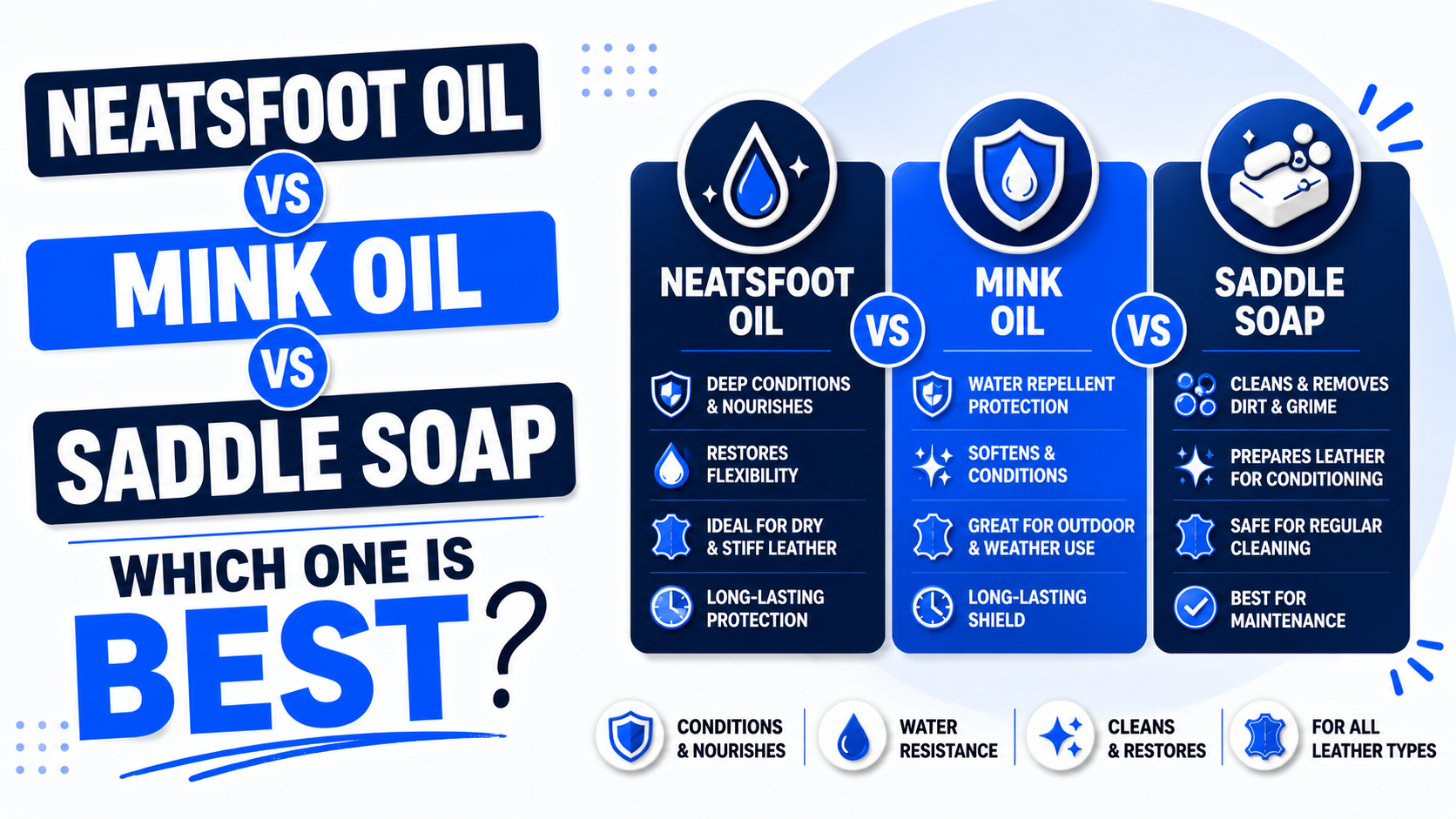
Walk into any leather care aisle, or scroll through an Amazon search for boot conditioner, and you will run into three products that get mentioned constantly: neatsfoot oil, mink oil, and saddle soap. They are often talked about as if they are interchangeable, but they solve different problems. Neatsfoot oil deeply oils and softens dry, thirsty leather. Mink oil conditions and adds a water-resistant layer. Saddle soap cleans leather and lifts dirt, sweat, and old product buildup before either oil goes on. Mixing them up, or skipping the cleaning step entirely, is one of the most common ways people damage boots, saddles, baseball gloves, and work leather that should have lasted for years.
This guide from Designer Trends INC breaks down what each product actually does, which leather goods they are best suited for, and how to combine them in the right order so you get soft, strong, protected leather instead of a sticky, over-oiled mess. It also explains where each product falls short, so you are not relying on a single miracle product to do a job that really needs three different tools.
Affiliate disclosure: This article includes affiliate links. If you buy through these links, Designer Trends INC may earn a commission at no extra cost to you.
What Is Neatsfoot Oil?
Neatsfoot oil is a traditional leather conditioning oil originally rendered from the shin bones and feet of cattle, though many modern versions use blended or synthetic formulas designed to copy its properties. Pure neatsfoot oil is thin, penetrates quickly, and is prized for softening leather that has become stiff, dry, or brittle. It is a favorite in work boots, tool belts, baseball gloves, and saddlery because it can restore flexibility to thick, heavy-duty leather that thinner lotions cannot reach.
The tradeoff is that neatsfoot oil can darken leather noticeably, sometimes permanently, and it does not add much surface water resistance on its own. It is not the right choice for lightly finished dress shoes, pale leather bags, or anything where you want to preserve the original color. It is the right choice when leather feels dry, cracked at the folds, or unusually stiff and you are not worried about a deeper, richer tone afterward.
What Is Mink Oil?
Mink oil is a conditioning fat traditionally derived from the fatty tissue of mink, used in many blended boot and work leather conditioners. It conditions leather while also leaving behind a layer that helps repel water and light moisture. Compared to neatsfoot oil, mink oil sits closer to the surface and is often marketed specifically for boots that face rain, snow, mud, and outdoor conditions.
Mink oil can also darken leather and, if overused, can soften the structure of a shoe or boot more than you want. It works well on rugged boots, tool belts, and outdoor gear leather. It is not the best pick for suede, nubuck, or delicate finished leather, and it should be used sparingly on dress shoes where a crisp, structured look matters more than heavy water resistance.
What Is Saddle Soap?
Saddle soap is a cleaning product, not a conditioner. It typically combines mild soap with small amounts of conditioning ingredients like glycerin or lanolin, designed to lift dirt, sweat, grime, and old wax or oil buildup from leather surfaces without stripping the material completely. It was originally developed for cleaning horse tack, which explains the name, and it remains one of the best general leather cleaners for boots, belts, bags, and work gear.
Saddle soap should usually be the first step in a leather care routine, not the last. Cleaning before conditioning matters because oil applied over dirt, salt, or old product can trap grime against the leather and create an uneven, blotchy finish. Saddle soap is gentle enough for regular use, but it can still dry leather out over time if you never follow it with a conditioning oil.
Recommended Eagle Shoe Care Products on Amazon
For a complete kit that covers all three steps, start with the Eagle Shoe Care Amazon store, which carries a 100% pure neatsfoot oil, a 3-piece saddle soap kit, and a 4-in-1 mink oil conditioner alongside applicator brushes and cloths. Having all three in one cabinet makes it far easier to follow the correct clean, condition, protect order instead of reaching for whatever bottle is closest.
You can also compare Eagle Shoe Care neatsfoot oil options on Amazon and Eagle Shoe Care saddle soap on Amazon if you are building a kit item by item. Buy based on the leather you actually own. Rugged outdoor boots and tool belts benefit most from neatsfoot oil and mink oil, while everyday cleaning across your whole leather collection is what saddle soap is for.
Best buy for this routine
Start with a saddle soap kit from Eagle Shoe Care for cleaning, then add neatsfoot oil for very dry, stiff leather or mink oil for outdoor boots that need extra water resistance.
Which One Should You Use First?
The safest order is clean, then condition, then protect. Saddle soap should come first to remove dirt, sweat, and old product so the oil you apply afterward can absorb evenly. Once the leather is clean and dry, choose neatsfoot oil if the leather feels stiff, cracked, or unusually dry, or mink oil if you want conditioning plus a bit of extra water resistance for outdoor use. Applying oil before cleaning is one of the most common mistakes, because it seals dirt and salt against the leather instead of removing it.
Do not use neatsfoot oil or mink oil on suede, nubuck, or patent leather. Both are formulated for smooth, open-pore leather and can flatten nap or damage coated finishes. If you are unsure what finish you have, our guide to nubuck vs suede care can help you identify the material before choosing a product.
Best Uses for Each Product by Item Type
Work boots that face mud, rain, and long shifts usually benefit most from a saddle soap cleaning followed by mink oil for conditioning and water resistance. Baseball gloves and tool belts, which need deep, repeated flexing rather than water resistance, often respond best to neatsfoot oil because it penetrates thick, dense leather and keeps it supple through heavy use. Dress shoes and structured leather bags usually need only a light touch of either oil, since heavy oiling can soften the shape and darken pale leather more than intended.
Saddles, tack, and other equestrian leather goods are the classic use case for saddle soap, since that is the application the product was originally designed for. If you use these products on footwear instead of tack, treat the labels as a guide rather than a strict rule, and always test on a hidden area first, especially with lighter leather colors.
Common Mistakes to Avoid
Do not apply neatsfoot oil or mink oil directly over dirt, salt, or old polish. Clean first with saddle soap and let the leather dry completely. Do not assume more oil means better results. A thin, even coat that fully absorbs is more effective than a heavy application that leaves a greasy surface and attracts dust. Do not use neatsfoot oil on leather where you want to preserve a light or original color, since darkening is often permanent. Finally, do not skip saddle soap entirely just because oil feels like the more exciting product. Clean leather is what allows conditioning oils to work properly in the first place.
How Often Should You Use Each Product?
Saddle soap can be used whenever leather looks dirty or has visible buildup, which for frequently worn boots or gloves might be every few weeks. Neatsfoot oil and mink oil should be used more sparingly, generally only when the leather starts to feel dry, stiff, or less flexible than usual. Over-conditioning with either oil can soften structure and shorten the life of stitching and shape over time, so let the leather's condition guide the schedule rather than applying oil on a fixed calendar.
Backlinks and Related Resources
For more on building a complete leather care routine, read our comparison of shoe polish vs leather conditioner and explore the full Designer Trends INC brand portfolio, including Eagle's neatsfoot oil, saddle soap, and mink oil conditioner lines. For general consumer product guidance, the FTC consumer information resources are a useful reference when comparing product claims online.
FAQs
Can I use neatsfoot oil and mink oil together?
You generally do not need both at once. Choose neatsfoot oil for deep softening of very dry leather, or mink oil when you also want extra water resistance. Using both back to back can over-oil the leather.
Does saddle soap replace conditioner?
No. Saddle soap cleans leather and contains only light conditioning ingredients. Dry or stiff leather still needs a dedicated oil or conditioner afterward.
Will neatsfoot oil darken my boots?
Often, yes, and the change can be permanent. Always test on a hidden area first, especially on tan, light brown, or unfinished leather.
Can I use these products on baseball gloves?
Neatsfoot oil is a traditional choice for softening baseball glove leather during break-in. Use it sparingly and let the glove absorb the oil fully before use.
Is mink oil safe for all leather?
No. Avoid mink oil on suede, nubuck, and patent leather. It works best on smooth, open-pore leather like boots, belts, and work gear.
How do I know if my leather needs saddle soap or just a dry wipe?
If a dry brush or cloth removes the dirt, that may be enough. If grime, salt, or old product buildup remains, saddle soap and a damp cloth will clean more thoroughly before conditioning.
Conclusion
Neatsfoot oil, mink oil, and saddle soap are not competing products, they are three steps in the same routine. Clean with saddle soap, condition with neatsfoot oil when leather needs deep softening, or mink oil when you also want water resistance, and always test on a hidden area before treating the whole item. Used in the right order and in the right amount, these three products can keep boots, gloves, belts, and tack flexible, protected, and ready for years of hard use.
Join the Discussion
Comments (0)
No comments yet. Be the first to share your thoughts!