
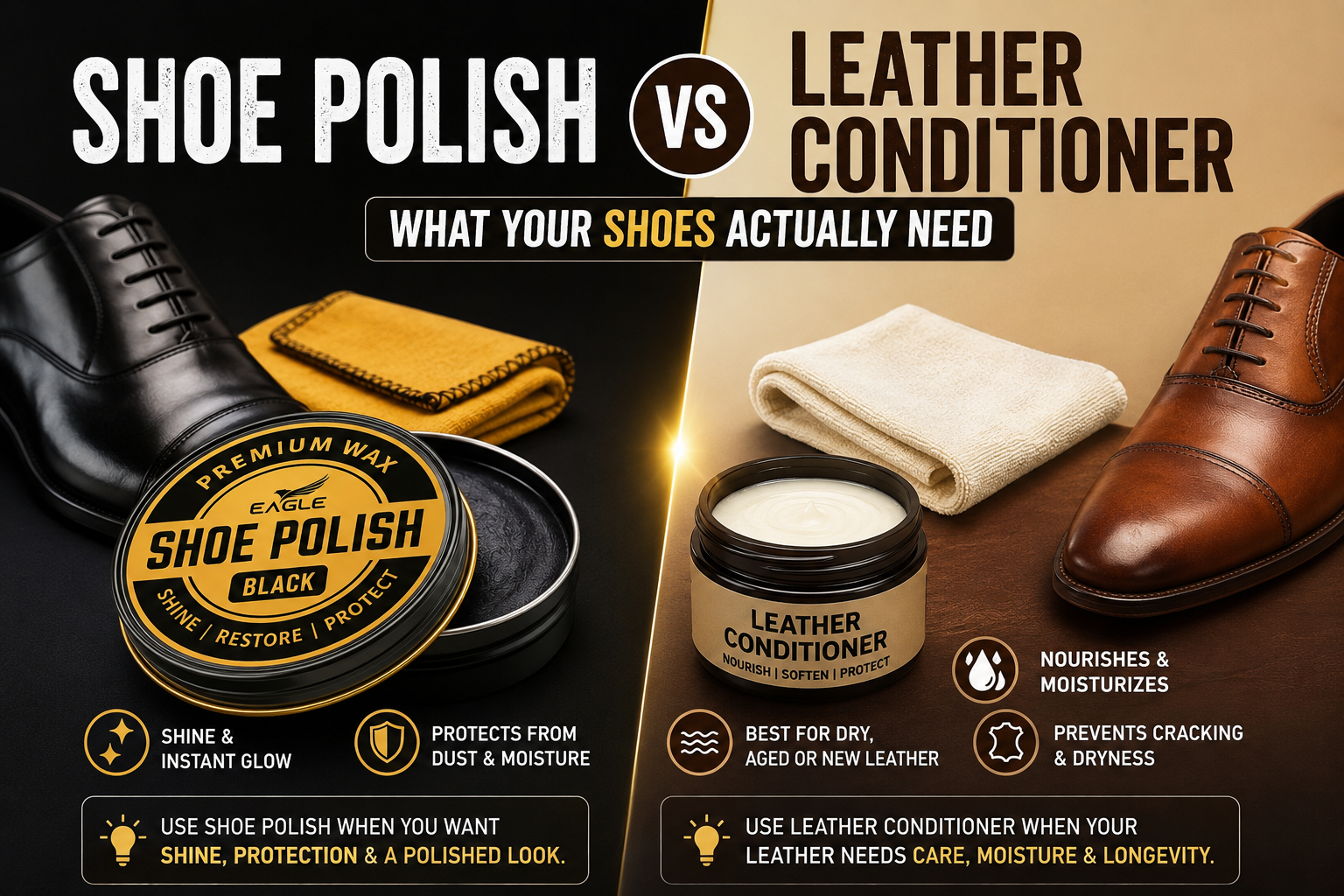
Shoe Polish vs Leather Conditioner: What Your Shoes Actually Need
Shoe polish and leather conditioner are often mentioned together, but they are not the same product. Polish improves color, shine, and surface appearance. Conditioner helps keep leather flexible by replenishing moisture and oils. If you only polish shoes without conditioning them, the surface may look good while the leather slowly dries out. If you only condition shoes without polishing them, they may stay flexible but look dull or scuffed.
Understanding the difference helps you build a better shoe care routine. This article explains what each product does, when to use it, what order to apply products in, and how to avoid common mistakes that shorten the life of quality footwear.
What Is Shoe Polish?
Shoe polish is designed to improve the visible finish of smooth leather footwear. Cream polish usually contains pigments and conditioning agents that help restore color and soften light scuffs. Wax polish creates a higher shine and adds a thin protective layer on the surface. Many dress shoe routines use both: cream polish for color and wax polish for shine.
Polish is most useful when shoes look faded, scratched, or dull. It can make black, brown, oxblood, tan, and other leather colors look richer. However, polish does not replace cleaning. Applying polish over dirt or salt can trap residue against the leather and make the finish uneven.
What Is Leather Conditioner?
Leather conditioner is made to maintain flexibility and prevent dryness. Leather is a natural material, and regular wear, sunlight, dust, water, and heat can pull moisture from it. Conditioner helps reduce stiffness, cracking, and premature aging. It is especially useful for boots, dress shoes, leather bags, belts, and older footwear that feels dry to the touch.
Conditioner should be used sparingly. Too much can darken leather, soften structure, or leave a tacky surface. A small amount applied with a cloth is usually enough. Let it absorb fully before polishing or storing the shoes.
Recommended Eagle Shoe Care Products on Amazon
To compare polish, conditioner, and related tools, visit the Eagle Shoe Care Amazon store. You can also browse Eagle Shoe Care shoe polish on Amazon and Eagle Shoe Care leather conditioner on Amazon when building a complete care kit.
A practical kit should include cleaner, conditioner, polish matched to your leather color, a horsehair brush, applicator cloths, and a detail brush. Black and brown shoes are easiest to match. Tan, cognac, oxblood, burgundy, and hand-finished leathers need more careful color testing.
Which One Should You Use First?
The safest order is clean, condition, polish, then protect. Cleaning removes dust and residue. Conditioning restores flexibility. Polish improves color and shine. A protector can then help reduce future moisture and stains. For shoes that are already clean and only need shine, polish may be enough. For dry shoes with creasing or stiffness, conditioner should come before polish.
Do not condition suede or nubuck with smooth leather conditioner. These materials need separate care tools and sprays. If your shoes are patent leather, use products made for coated leather rather than standard cream or wax polish.
Cream Polish vs Wax Polish
Cream polish is usually the better first choice when leather has faded color or light scuffs. It spreads easily, carries pigment into the surface, and leaves a natural finish. Wax polish sits more on top of the leather and is best for shine, toe caps, heel counters, and dress shoes that need a formal look.
Use wax carefully around flexible areas because heavy wax buildup can crack where the shoe bends. If you want a mirror shine, build it slowly on the toe and heel instead of coating the entire shoe in thick layers.
How to Tell What Your Shoes Need
If leather looks dusty, clean it. If it feels dry, condition it. If color looks faded, use cream polish. If the color looks good but you want shine, use wax polish. If the weather is wet, finish with a protector that is appropriate for smooth leather.
For new shoes, do not rush into heavy conditioning. Many new pairs already contain enough oils from manufacturing. Brush them, protect them if needed, and condition later when the leather begins to feel dry from real wear.
How Often Should Shoes Be Polished or Conditioned?
Office dress shoes worn weekly may need light brushing after each wear, polish every few wears, and conditioning every two or three months. Boots exposed to rain, dust, or salt may need care more often. Shoes stored for a long time should be checked before wear because leather can dry even when not used.
The best guide is the leather itself. If it looks faded but feels flexible, polish. If it feels dry, rough, or stiff, condition. If it is dirty, clean before doing anything else.
Backlinks and Helpful Reading
Explore more guidance in our leather care product guide, browse our brand portfolio, or contact Designer Trends INC for business inquiries. For general consumer education, the FTC consumer information resources can help shoppers evaluate product claims and online sellers.
FAQs
Can shoe polish replace leather conditioner?
No. Polish improves appearance and color, while conditioner supports flexibility. Some cream polishes include light conditioning ingredients, but dry leather still benefits from dedicated conditioner.
Can I condition shoes too often?
Yes. Too much conditioner can darken leather, soften structure, and leave residue. Use small amounts only when the leather feels dry or looks tired.
Should I use cream polish or wax polish first?
Use cream polish first for color restoration, then wax polish if you want more shine. Always clean before applying either product.
Can I polish suede shoes?
No. Standard shoe polish is for smooth leather. Suede needs brushing, erasers, specialty cleaners, and suede protector spray.
Conclusion
Shoe polish and leather conditioner work best as partners. Conditioner supports the health and flexibility of leather, while polish restores beauty, color, and shine. Use both thoughtfully, apply small amounts, and match products to the leather type. A careful routine can keep quality shoes looking refined and feeling comfortable for years.
Join the Discussion
Comments (0)
No comments yet. Be the first to share your thoughts!