
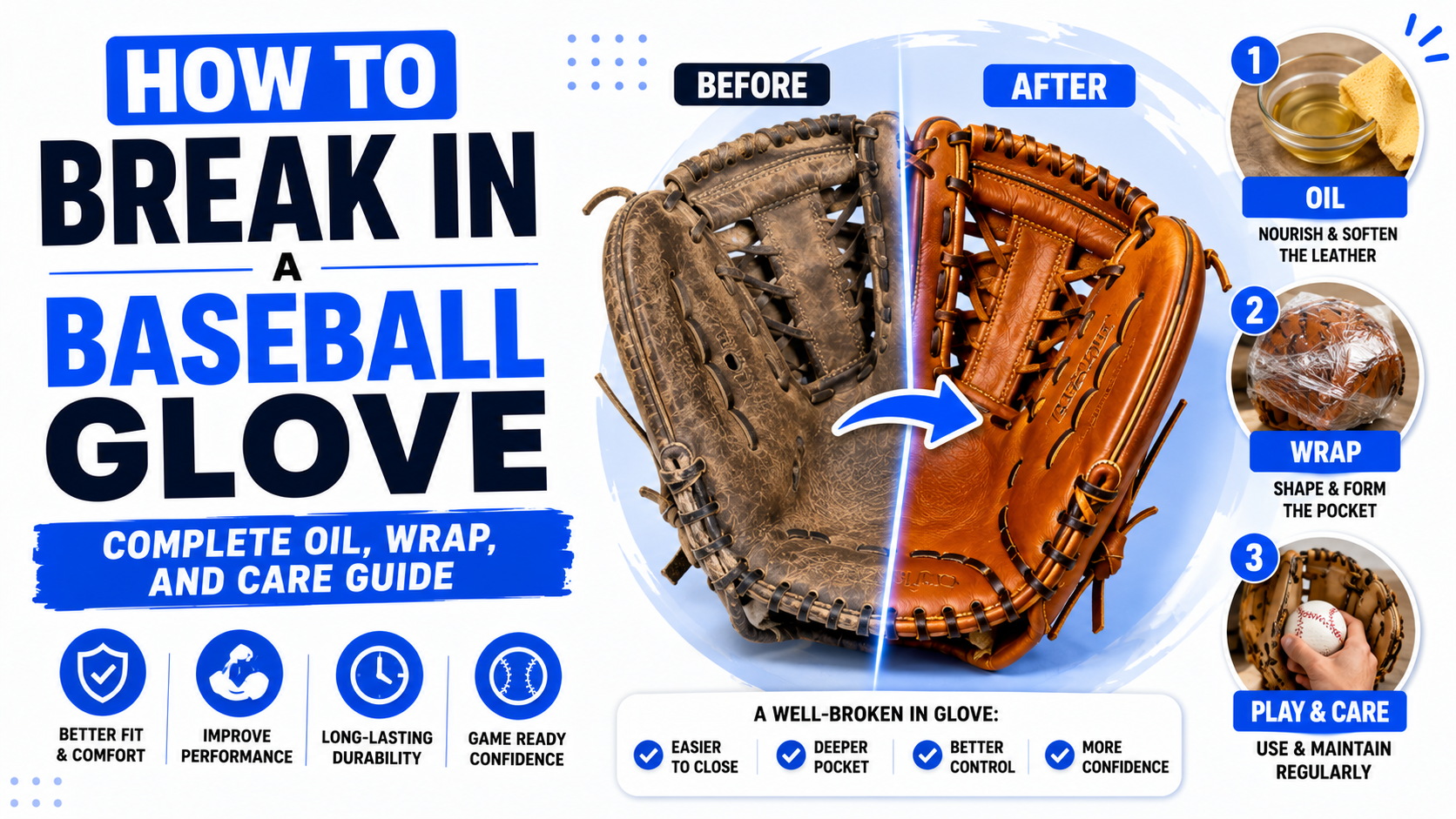
How to Break In a Baseball Glove: Complete Oil, Wrap, and Care Guide
A brand new baseball glove is stiff for a reason. Manufacturers use firm, dense leather so the glove holds its shape and lasts through years of catches, throws, and diving stops. That same stiffness makes a new glove frustrating to use until it is properly broken in. Rushing the process with shortcuts like ovens, microwaves, or soaking the glove in water can permanently damage the leather, while a patient oil-and-wrap routine can turn a stiff glove into a game-ready tool with a deep, stable pocket that holds its shape for seasons.
This guide from Designer Trends INC explains how to break in a baseball glove the right way, including how much oil to use, how to shape the pocket, how to wrap and tie the glove between sessions, and which popular shortcuts actually damage leather instead of helping it.
Affiliate disclosure: This article includes affiliate links. If you buy through these links, Designer Trends INC may earn a commission at no extra cost to you.
Why Glove Break-In Matters
A stiff glove is harder to close quickly, harder to control, and more likely to let a ball pop out of a shallow, undefined pocket. Breaking in a glove softens the leather at the hinge points, especially between the thumb and fingers, and helps the pocket set into a shape that matches how you actually catch. A properly broken-in glove closes faster, holds the ball more securely, and feels like an extension of your hand instead of a rigid piece of gear.
Skipping break-in, or doing it carelessly, often means months of awkward catches and a pocket that never quite forms in the right place. Doing it well up front saves an entire season of frustration.
Choosing the Right Oil or Conditioner
Not all oils are appropriate for glove leather. Thin, purpose-made glove oils or conditioners are designed to soften without over-saturating the leather. Neatsfoot oil is a traditional choice for gloves because it penetrates thick, dense leather effectively, but it should be used sparingly since too much can leave a glove feeling heavy, greasy, and prone to attracting dirt. Avoid cooking oils, petroleum jelly, and heavy motor or household oils. These are not designed for leather and can break down stitching, attract grime, or leave a glove smelling unpleasant over time.
Step-by-Step Baseball Glove Break-In Routine
- Apply a small, even amount of glove oil or neatsfoot oil to the palm, fingers, and hinge area with a soft cloth.
- Work the oil in with your hands, flexing the glove open and closed repeatedly.
- Place a baseball or softball in the pocket where you naturally want the ball to sit.
- Fold the glove closed around the ball and press firmly to begin shaping the pocket.
- Wrap the glove with strong string, an elastic band, or a glove wrap, keeping the ball pressed into the pocket.
- Let the glove sit wrapped for at least a full day, longer for very stiff new gloves.
- Unwrap, flex the glove by hand, and repeat oiling lightly if it still feels stiff.
- Play catch regularly, since repeated real use is what finally finishes the break-in process.
Patience matters more than force here. A thin layer of oil that fully absorbs over a day is more effective than a heavy application that leaves the leather feeling soft but structurally weak. Multiple light sessions almost always produce a better long-term pocket than one aggressive attempt.
What Not to Do When Breaking In a Glove
Avoid putting a glove in the oven or microwave. Direct heat can dry out leather, warp the shape, damage the padding, and in some cases create a fire risk. Avoid soaking the glove in water, since excess water can stiffen leather as it dries and may damage the lacing and padding inside. Shaving cream is a popular internet shortcut because some formulas contain small amounts of lanolin, but many modern shaving creams do not, and using the wrong product can leave residue without actually softening the leather. A purpose-made glove oil or conditioner is a more reliable choice than kitchen or bathroom substitutes.
Recommended Products for Glove Break-In
Eagle extends its footwear care catalog into sporting goods with dedicated baseball glove break-in kits, which typically include oil or conditioner formulated for dense glove leather along with instructions for shaping the pocket. Browse the Eagle Shoe Care Amazon store or compare Eagle baseball glove break-in kits on Amazon to find an oil or conditioner sized for glove leather rather than a generic shoe product.
Best buy for this routine
Choose a purpose-built glove break-in kit from the Eagle Shoe Care store over kitchen substitutes so the oil, wrap, and pocket-shaping steps all work together instead of fighting each other.
Speeding Up Break-In Safely
Playing catch is the single best way to finish breaking in a glove, since repeated real catches shape the pocket exactly where you need it. Using a mallet designed for glove break-in can help soften the pocket faster than a bare ball, especially for very stiff new gloves. Repeating the oil-and-wrap cycle every few days for the first couple of weeks, combined with regular use, usually produces a well-formed glove faster than any single aggressive shortcut.
Does Playing Position Change the Break-In?
Infield gloves are usually broken in with a shallower, tighter pocket so the ball can be released quickly for a fast throw. Outfield gloves often benefit from a deeper pocket, since outfielders have more time to secure the catch and want extra security on long throws and diving plays. Catcher's mitts and first base mitts are built differently, with heavier padding and less finger separation, so the break-in routine focuses more on softening the pocket pad and hinge than on shaping individual finger stalls. Pitchers often prefer a closed, snug pocket that hides grip and hand position from the batter, which can mean less aggressive pocket shaping than an infield or outfield glove. Keep your position in mind when deciding how deep to shape the pocket and how long to keep the glove wrapped.
Maintaining a Broken-In Glove Long Term
Once a glove is broken in, maintenance is lighter but still important. Wipe off dirt and dust after games and practices. Reapply a small amount of conditioner every few months, or sooner if the leather starts to feel dry or stiff again. Store the glove with a ball in the pocket, either wrapped or inside a form, so it holds its shape during the off-season. Keep gloves out of direct sunlight and away from car trunks in hot weather, since heat can dry out leather even after it has been properly broken in.
Common Mistakes to Avoid
Do not over-oil the glove in a single session. Do not use heat sources like ovens, hair dryers on high heat, or car dashboards to speed up softening. Do not soak the glove in water. Do not skip wrapping the glove after shaping the pocket, since this step is what actually holds the shape while the leather adjusts. Do not ignore the glove for months at a time during the off-season, since leather continues to dry out even when it is not being used.
Backlinks and Related Resources
For more on leather conditioning oils, read our comparison of neatsfoot oil vs mink oil vs saddle soap and explore the full Designer Trends INC brand portfolio to see Eagle's complete catalog of leather care and sporting goods kits. For general consumer product guidance, see the FTC consumer information resources.
FAQs
How long does it take to break in a baseball glove?
It varies by glove stiffness and how often you play, but most gloves take one to a few weeks of oiling, wrapping, and regular catch to feel properly broken in.
Is it safe to put a baseball glove in the oven?
No. Direct heat can dry out and warp the leather, damage the padding, and create a fire risk. Use oil, hand shaping, and wrapping instead.
How much oil should I use on a new glove?
Use a small, even amount and let it absorb fully before deciding if more is needed. Too much oil can make a glove heavy, greasy, and prone to attracting dirt.
Does shaving cream really break in a glove?
Some older shaving cream formulas contained lanolin, which offered mild conditioning, but many modern formulas do not. A purpose-made glove oil or conditioner is a more reliable choice.
Should I wrap my glove after every use?
Wrapping is most important during the initial break-in period to set the pocket. Afterward, storing the glove with a ball inside during the off-season helps it hold its shape.
Can I use neatsfoot oil on a baseball glove?
Yes, it is a traditional choice for softening thick glove leather. Use it sparingly and let it absorb fully rather than applying a heavy, saturating coat.
Conclusion
Breaking in a baseball glove rewards patience over shortcuts. Apply a light coat of oil, shape the pocket around a ball, wrap the glove to hold that shape, and let regular catch finish the job. Skip the ovens, microwaves, and water soaks that promise a fast fix but risk permanent damage. With a steady routine and light ongoing conditioning, a well broken-in glove can perform reliably for many seasons on the field.
Join the Discussion
Comments (0)
No comments yet. Be the first to share your thoughts!