
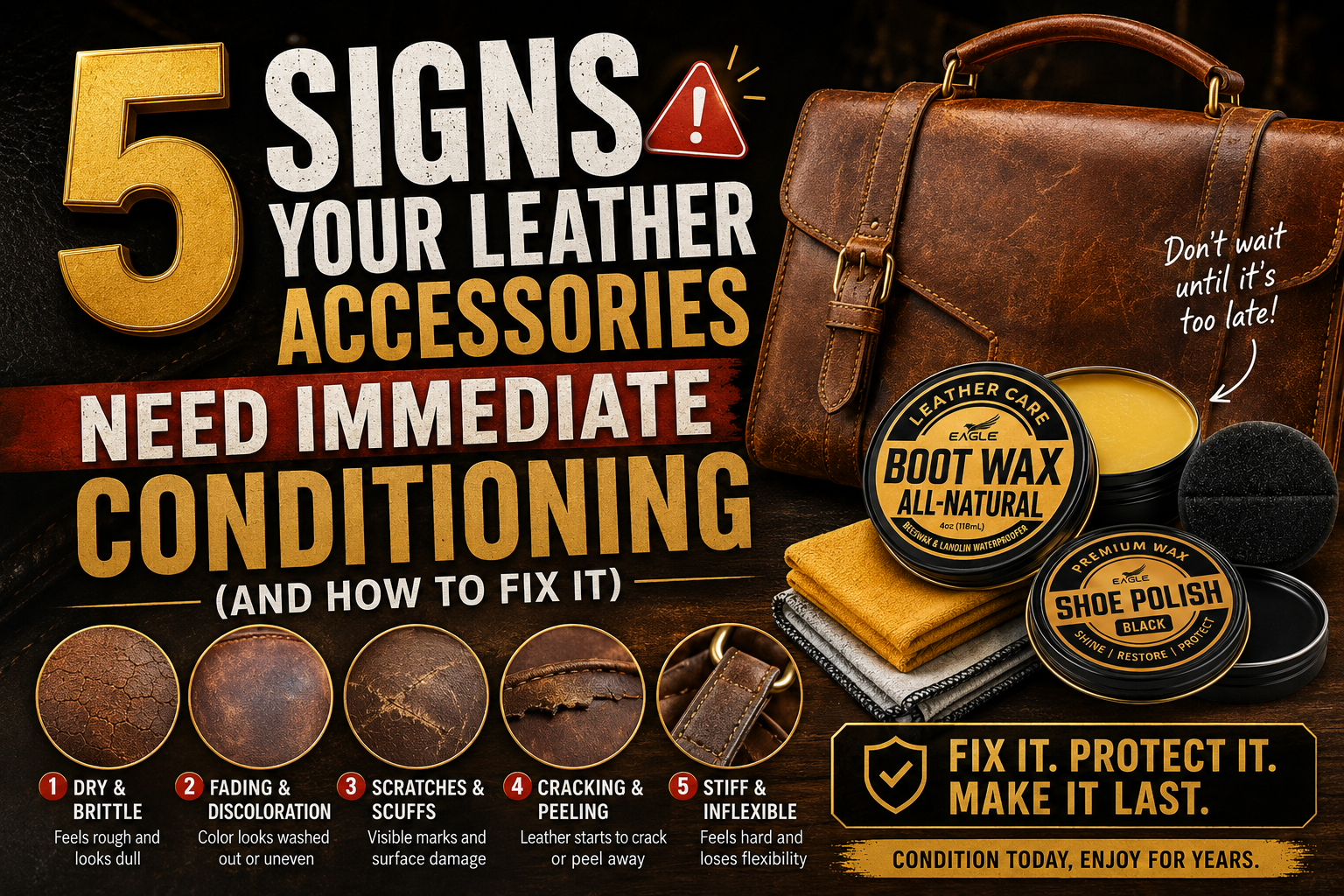
5 Signs Your Leather Accessories Need Immediate Conditioning (And How to Fix It)
Leather accessories rarely fail overnight. A purse, belt, wallet, briefcase, watch strap, boot, or leather jacket usually gives warning signs before the surface cracks, fades, stiffens, or loses its shape. The problem is that many people wait until leather looks obviously damaged before they treat it. By then, the repair is harder, more expensive, and sometimes impossible to fully reverse.
Conditioning is one of the simplest ways to keep leather flexible, balanced, and attractive. It helps replace some of the oils and moisture that leather loses through wear, heat, sunlight, friction, dry air, and cleaning. But timing matters. Condition too often and the leather can darken, soften, or feel greasy. Wait too long and it can crack or become permanently stiff.
This guide explains the five clearest signs your leather accessories need immediate conditioning, how to fix each one, and which products make sense for purses, smooth leather accessories, boots, belts, and polished footwear.
Affiliate disclosure: This article includes affiliate links. If you buy through these links, Designer Trends INC may earn a commission at no extra cost to you.
Animated leather rescue map
Fast diagnosis
Sign 1: The Leather Feels Dry, Rough, or Papery
The first warning sign is texture. Healthy smooth leather should feel flexible and slightly rich, not brittle, chalky, or papery. If a leather handbag handle, wallet fold, belt edge, boot shaft, or jacket sleeve feels rougher than usual, the leather may be losing the internal balance that keeps it pliable.
Dryness often appears after heat exposure, long storage, frequent sun, air conditioning, winter air, or repeated cleaning without conditioning. It can also happen on high-touch areas where skin oils and friction wear down the finish.
How to fix it
Brush or wipe away dust first. For purses and accessories, use a clean microfiber cloth and a small amount of leather-safe cleaner if needed. Let the item dry completely. Then apply a very thin layer of conditioner with a soft cloth, working panel by panel. Wait several minutes and buff gently. If the leather still feels dry later, repeat with another light layer instead of overloading the surface at once.
For handbags and designer accessories, the Leather Hero 2-in-1 Purse Cleaner & Conditioner from the PDF is the most relevant product link because it is positioned for handbags, designer bags, faux and saffiano leather, purses, jackets, and similar accessories.
Sign 2: Color Looks Faded, Cloudy, or Uneven
Leather color can fade from UV light, friction, dryness, and surface buildup. A black wallet may look gray around the corners. A brown belt may look dusty even after wiping. A purse may look flat and tired around the handles. This does not always mean the dye is gone; sometimes the leather needs cleaning, conditioning, and a light restoration routine.
Color issues are more urgent when dullness appears with dryness or rough texture. That combination means the leather is not only losing surface beauty but also flexibility.
How to fix it
Clean first so you are not rubbing conditioner over dirt. If the accessory is smooth leather, use a leather cleaner/restorer or a gentle leather cleaner kit. The PDF includes Leather Hero Cleaner & Restorer and a Leather Cleaner and Conditioner Kit, both relevant for smooth leather care routines.
If the color loss is severe, conditioning alone may not be enough. A color restorer may be needed after cleaning and before sealing or final protection. The PDF also lists Leather Hero Leather Color Restorer & Applicator, which is more appropriate when the issue is visible color loss rather than simple dryness.
Sign 3: Creases Look Sharp, Pale, or Stressed
Creasing is normal. Leather bends, folds, and moves. The concern is when creases become sharp, pale, or raised, especially around purse handles, bag corners, wallet folds, boot shafts, jacket elbows, or belt holes. These stress marks show that the leather is flexing without enough suppleness.
If ignored, stressed creases can become cracks. Once leather cracks through the surface, conditioner may improve feel but cannot fully erase the break. That is why conditioning at the crease-warning stage matters.
How to fix it
Support the item while conditioning. Stuff handbags lightly with clean tissue or bag inserts so panels do not collapse. Lay belts flat. Use shoe trees or boot forms for footwear. Clean the creased area, apply conditioner thinly, let it absorb, and gently flex the leather after it has rested. Do not force a crease flat while the leather is dry.
For boots or heavier leather accessories that face weather, the Eagle Boot Wax Waterproofer & Conditioner can help when the goal is conditioning plus weather resistance on compatible smooth leather. Use it cautiously on fashion accessories because wax can darken leather and create a more rugged finish.
Sign 4: The Accessory Has Become Stiff or Squeaky
Stiffness is one of the clearest signs that leather needs attention. A leather jacket that no longer drapes naturally, a purse handle that feels rigid, a boot shaft that resists movement, or a belt that squeaks when bent may be drying out. Stiffness can come from storage, low humidity, repeated wet-dry cycles, or old product buildup.
Before adding conditioner, check whether the stiffness is from dirt and buildup. Too much old polish, wax, or cleaner residue can make leather feel coated rather than nourished.
How to fix it
Clean the item gently and let it dry. Apply conditioner in small amounts, then give the leather time to absorb it. For stiff bags and jackets, avoid heavy waxes unless the item is rugged leather. For stiff boots, wax or conditioner can help, depending on the finish and how much water resistance you need.
If stiffness is paired with a formal black shoe or polished boot, the Eagle Shoe Polish Wax 3-Piece Kit may help restore shine and surface protection after conditioning. Polish is not a replacement for deep conditioning, but it can improve scuffed, dull, smooth leather once the leather is no longer dry.
Sign 5: Water Absorbs Quickly Instead of Beading
Leather that immediately darkens or absorbs water is vulnerable. Some leathers are naturally absorbent, but if an accessory used to repel light moisture and now drinks it in, the protective finish may be worn down. This is common on bag bottoms, handles, boot toes, jacket shoulders, and belt edges.
Do not test this aggressively by soaking leather. A tiny hidden-area test is enough. If water absorbs quickly, the item may need cleaning, conditioning, and protection.
How to fix it
Clean the leather, condition lightly, and then add the correct protection for the item. For purses and accessories, use a product that matches the leather finish and does not darken or leave a greasy layer. For boots and weather-facing leather, boot wax may be appropriate. For dress shoes, polish may be better because it preserves appearance while adding light surface protection.
Conditioning urgency scorecard
Best Product Match by Accessory Type
| Accessory | Best first step | Relevant link |
|---|---|---|
| Handbags and purses | Gentle cleaning plus light conditioning. | Purse cleaner & conditioner |
| Belts, wallets, briefcases | Clean, condition lightly, buff away residue. | Cleaner & restorer |
| Boots and rugged leather | Condition and protect from water exposure. | Boot wax waterproofer |
| Polished shoes and formal leather | Condition if dry, then polish for shine and scuffs. | Shoe polish wax kit |
How to Condition Leather Accessories Safely
- Identify the leather type. Smooth finished leather, suede, nubuck, patent leather, saffiano leather, and faux leather need different care.
- Clean first with a soft cloth, brush, or leather-safe cleaner.
- Let the accessory dry naturally before applying conditioner.
- Test the product on a hidden area and wait to check darkening.
- Apply a thin layer with a soft cloth, sponge, or applicator.
- Let it absorb, then buff away excess product.
- Store the item in a breathable space away from heat and direct sunlight.
Never soak leather with conditioner. The goal is to restore balance, not saturate the material. If an item needs more care, use multiple light sessions instead of one heavy application.
What Not to Condition
Do not use smooth leather conditioner on suede or nubuck. It can flatten the nap and leave dark stains. Do not use heavy wax on delicate designer bags unless the product is specifically intended for that finish. Do not use shoe polish on absorbent, textured, fabric, patent, or coated materials unless the label supports it.
When in doubt, start with a hidden-area test or choose a product made for that exact item type. Our related guides on shoe polish vs. leather conditioner, making leather shoes last 10+ years, and boot wax vs. shoe polish explain the differences in more detail.
Frequently Asked Questions
How do I know if leather needs conditioner?
Leather likely needs conditioner when it feels dry, looks dull, forms sharp pale creases, becomes stiff, or absorbs moisture faster than usual.
Can I condition leather too much?
Yes. Over-conditioning can darken leather, soften structure, create residue, or attract dust. Apply thin layers only when the leather shows signs of dryness.
Should I clean leather before conditioning?
Yes. Cleaning removes dust, salt, oils, and old product buildup so conditioner can absorb more evenly.
Can I use the same conditioner on purses and shoes?
Sometimes, if both are smooth finished leather and the product label supports both uses. Designer bags, light leather, suede, nubuck, and coated leathers need extra caution.
Does conditioner fix cracked leather?
Conditioner can improve feel and slow further drying, but it cannot fully erase deep cracks. Cracked leather may need filler, color restoration, or professional repair.
Should I use boot wax on leather handbags?
Usually no, unless the handbag is rugged smooth leather and you accept possible darkening or a waxier finish. For handbags, a purse-focused cleaner and conditioner is usually safer.
Conclusion
The five signs your leather accessories need immediate conditioning are dryness, dull color, stressed creases, stiffness, and fast water absorption. Catching these signs early can prevent cracking, fading, and permanent shape damage. The fix is simple: clean gently, condition lightly, test first, and match the product to the accessory.
For purses and handbags, start with a handbag-focused product like the Leather Hero 2-in-1 Purse Cleaner & Conditioner. For smooth leather accessories, consider a cleaner and restorer. For boots, use the boot wax waterproofer when weather protection matters. For polished shoes and formal leather, finish with the shoe polish wax kit after the leather is clean and balanced.
Join the Discussion
Comments (0)
No comments yet. Be the first to share your thoughts!